Thursday, January 08, 2009

The Best Way To Tell If Something Is Truly Great.


Is The Dark Knight the greatest superhero movie ever made?

Is Tiger Woods the greatest golfer ever?

Is Revolutionary Road the greatest book written in the 60s?

The answers to those questions are not subjective. Not anymore. I have hit on a way to answer questions like that, to answer any questions about whether someone is great and whether they are the greatest and to do so in a totally objective manner.

And using that method, the answers are:

No.

Yes.


And

Not by a long shot.

This is a debate that started when Some Guy At Work mentioned to me that Kurt Vonnegut, maybe, or some other writer who wrote in the 60s had said that Revolutionary Road was the greatest book of the 1960s. That surprised me because I had never heard of Revolutionary Road-the-book; I had only just heard of Revolutionary Road-the-movie-people-will-talk-about-but-not-see, and didn't know much about it otherwise.

So I told Some Guy At Work that it was impossible for Revolutionary Road to have been the greatest book of the 1960s, because I had never heard of it.

Right on the spot, I formulated what will from now on be known as The TBOE Measure of True Greatness, which is the simplest, most objective means why which humankind can measure greatness. This is the test:


The more people who have heard of something, the greater it is.

It's that simple and easy.

Since I propounded that theory a few weeks ago, Some Guy At Work has occasionally tried to challenge it and has not yet successfully found a flaw in it, and you readers won't, either, because it is a flawless theory.

Here's how it works in practice. Something, anything, comes into existence. It has a category -- much as everything here on TBOE has a category -- and in that category, it is greater or worse-er than other things in that category.

Now, to define what is good in that category, people who are knowledgeable about that category are sufficient. If you want to know who is a good football player, or what is a good sandwich, or what might be a good book about domestic troubles in the 1960s, then people who know about football or sandwiches or books about domestic troubles in the 1960s can tell you. They can say this is good, that is good, this other thing is good, that other thing is not. I'm fine with subjective criteria defining what's good or not in a given category. I'm okay with people subjectively deciding that the Harry Potter books are good books about a kid going to a wizarding school and not quite ever doing well, while "The Worst Witch" is not a good book about, coincidentally, that same exact subject, only written about 15 years before Harry Potter.

I'm also okay with people not drawing any conclusions whatsoever from the use of those two examples.

But if you want to know whether something is truly great, then experts are no good anymore, because, to be succinct, experts suck at determining what's great.

Ever read a movie review or book review or record review and try to figure out if the movie, book, or record was actually good or bad, but you can't because the reviewer is going on and on about things that you don't understand/care about? Ever read a restaurant review and think to yourself "Yeah, but how does it compare to a Big Mac?" I do, and you probably should.

Experts look at things that people as a whole don't care about. Experts look at things that people as a whole don't need to care about, because greatness is not determined solely by technical brilliance, which is what experts are concerned about. Experts look at cinematography, or the sound mix, or the texture of a food, or the technique of a golf swing, and they rate those based on criteria that may matter in their worlds, but don't matter as much when mixed into the larger scheme of things that determines greatness.

Let me take a concrete example: Football quarterbacking. If we're trying to determine who's a good football quarterback, then I'll let the experts give me some guidance on that. And the experts will tell you that good quarterbacks have certain techniques and attributes and qualities, and that the more they exhibit those characteristics, the better the quarterback is.

Which is all well and good for determining what's well and good.

But experts fall short when it comes to determining who is a great football quarterback because they can't let go of that expertise and step back, see the forest for the trees, put the technical attributes of goodness into perspective, and measure greatness by the only measure with which greatness can be measured, and that is greatness itself. Experts keep falling back on technique and qualifications, and so experts cannot recognize true greatness.


That's why experts can tell you that Donovan McNabb is a good quarterback. But they are no good at telling you that Brett Favre is a great quarterback, and they fail miserably when measuring who is the greatest quarterback -- because they fall back on "science" and technique and get all hung up on how many Superbowls have been won or games won or passing yards or touchdowns or teams played for... all measures that tell you if someone's good, but not great, and they miss the boat: Brett Favre is greater, not by statistical measures or technique or Superbowls, but because more people have heard of Brett Favre than have heard of Donovan McNabb.

Why have more people heard of Brett Favre than Donovan McNabb? Because Brett's played longer (demonstrating that he is greater) has won more Superbowls (demonstrating that he's greater) won more awards (demonstrating... you get the drill), all of which serve as indicators of his greatness, but which are only partial measures -- they are evidence of the greatness but not a measure of it -- but mostly people have heard about Brett Favre because he's been talked about more than other players, talked about for playing so long and winning so much and being so fun to watch, and talked about because when people see him play or hear about him playing or see him or hear about him, they talk about him more and spread the news of his greatness.

If Donovan McNabb was as great as Brett Favre at quarterbacking, as many people would have heard about him as have heard of Favre. But they haven't, and so McNabb is not as great as Favre. Technically speaking, he may be as good as Favre is, but he's not as great as Favre.

When it comes time to make that leap from which of these is good to which of these is great, experts must be left behind, and instead, greatness must be measured differently as I said. Greatness can only be measured against itself, and there is only one measure, then, of greatness, and that measure is how many people have heard of that thing?

Greatness is measured by how many people have heard of the thing you are questioning. How many people have heard of the Big Mac, or Michael Jordan, of Revolutionary Road? The more people who have heard of a thing, the greater it is.

It really is that simple.

Want to know who is a greater actor, Cary Grant or Tom Hanks? Whose name is more known to more people over more time? Want to know which is greater, a Big Mac or the Whopper? Which is recognized by more people over more time? The greatest president ever? The one who more people have heard of over time.

It really is that simple.

Here's why: Greatness expands and lives on. The expression I know it when I see it is a truism in human existence for so many things, greatness among them. Greatness can not be defined objectively other than to say we know it when we see it and because we know it when we see it greatness never dies out, it never goes away... it continues expanding and moving and rippling through the firmament for as long as it can, and the longer it can, the greater the thing is.

That's why Shakespeare can be comfortably said to be a greater playwright and poet than the others of his day -- without reading his poems, without analyzing his plays, without debating his word choice and structure, we can know that Shakespeare is the greatest poet and playwright of his day because there is no other poet or playwright from that era as renowned as Shakespeare.

It's that simple, really. Because ask yourself this: Why do we remember Shakespeare and teach him and talk about him and why does pretty much every person who's ever spoken English know at least a little something about Shakespeare... and know NOTHING about any other poet or playwright of that era?

The answer is because Shakespeare was heads and shoulders above the rest of them. He has to be, because there were countless other writers of plays and poems in that era. One source* (*my imagination; I just made this figure up) estimates that there were over 15,000 poets writing poems in the year in which Shakespeare wrote most of his works. However many there were, there were other poets and playwrights writing poems and plays when Shakespeare did, but most of them have been long forgotten, some almost immediately, some later.

So Shakespeare must be better than those other writers, objectively better, because why else would his work have lived on? Why else would we remember William Shakespeare but not, say, William Jones, 15th Century playwright? If Jones' plays were every bit as good as Shakespeare's, why haven't they survived? Why do we see Leonardo DiCaprio starring in William Shakespeare's Romeo + Juliet but not William Jones' Todd+Shawna?

It's because Todd+Shawna is inherently, objectively, not as great as Romeo + Juliet.

Don't fall back on publicity or marketing or anything like that, either. If publicity or marketing could guarantee exposure over time, then we'd know it. Publicity and marketing can get 50,000 people into a theater on opening week -- but it cannot get another 50,000 there the next week when people realize the movie sucks. For publicity and marketing to work over time, the product has to be good. And who is marketing Shakespeare's works now, anyway? Why would they still survive, when they are not being actively marketed?

No, there's no trick to it, at all. The more people know about something, the greater it is. Lots and lots and lots of people, over the centuries, have heard about Romeo and Juliet, making Romeo and Juliet one of the greatest plays of all time.

That's so because the greater something is, the longer it will live and the more other people will hear about it. When you read something, taste something, hear something great, your first instinct is to find someone else and tell them: read/taste/hear this. That spreads. That continues. That ripples outward, and the greatness carries it as far as it can before petering out. Now, if the thing you like isn't great at all, it probably stops pretty quickly. Your wife doesn't like the dessert, or your coworker puts the book down half-finished, and so on.


But if it is great, then that person, too, will like it and pass it on and tell someone else, and that process will continue until millions of people have eaten a McDonald's hamburger, or gone to a Rolling Stones' concert, or something.

And if it is truly great, then the legend will spread for years, decades, centuries -- which is how you can tell that The Odyssey is a truly great poem, why Edgar Allan Poe is a greater horror writer than Dean Koontz, and so much more.

I understand that this formula is not without controversy. The TBOE Measure of True Greatness says that Michael Jordan is the greatest basketball player ever, because by now pretty much everyone has heard of him. That makes him the greatest, ever, period: Greatness propagates itself and the debate is over. Michael Jordan is greater than Larry Bird, greater than Magic Johnson, greater than Dr. J, greater than any other basketball player. But there are some who will say sure, but they've heard of him because he was in commercials and movies and tried to play baseball.

Which just goes to show how truly great he was. Was Larry Bird so great that he could, at the height of his career, quit to play baseball and have that be covered obsessively by the media? Was Dr. J so great that merely putting him on TV meant that people would want to buy t-shirts with the tags printed on them? No. Michael Jordan's greatness on the basketball court led him to greatness off the basketball court. His greatness transcended mere basketball skill and carried him on and on and on to the point where it is simple to say Michael Jordan is the greatest basketball player ever because more people have heard of him than have heard of any other basketball player. It's that simple, really, and that objective: I have heard of Jordan, my grandma has heard of Jordan, people living in Lithuania and Tanzania and Brazil have heard of Jordan and he is, because he is better known, more great. Any qualms you feel about that are qualms you feel because you are not willing to embrace the objective and accept reality, reality being the more people have heard of something, the greater it is.

It is controversial, because The TBOE Measure of True Greatness also posits that the McDonald's Hamburger is the greatest hamburger ever -- and may be the greatest food ever. That's true because so many people have, in the past 50 years, heard of the McDonald's hamburger. It doesn't matter if they like it or hate it. They've heard of it, and greatness under this test merely requires that people have heard about it. When I was in Morocco, I met people who had never been to McDonald's -- there was, at the time, only one McDonald's restaurant in that country-- but they had heard about the McDonald's hamburger. They hadn't heard about the Whopper, or pizza, or corn on the cob or braunschweiger, because those foods are not as great as the McDonald's hamburger.

This, in turn, causes people problems because they don't want to accept that a fast food burger might be the greatest food ever. But that's just snobbery. Why can't a fast food hamburger be greater than a complicated French meal? Why is complexity celebrated over simplicity? The French meal may be harder to make (I don't know, though -- try cooking a McDonald's hamburger at home, and try cooking a French meal, and see which turns out more exactly like the source material) and may be more involved and all, but does that make it better? And if you say yes, why? Because of the technical expertise required to make it? Because of the flavors? That's just snobbery. You like the flavors better; but the rest of humanity doesn't because if they did, then the rest of humanity would eat McFrench Meals prepared in a complex manner at restaurants and the McDonald's hamburger would be an isolated blip.

The rest of humanity prefers the taste and simplicity of a McDonald's hamburger, and over 50 years more and more people have heard over and over and over how great a McDonald's hamburger is, while over that same time, fancy French cooking has failed to catch on in any significant way -- even though there have been innumerable cooking shows and cookbooks and fancy restaurants and the like pushing fancy cooking on people and celebrating it. Afer all of that, if you polled the entire world and asked them this:

Which of these have you heard of: creme brulee or the McDonald's hamburger?

I'm betting the hamburger would win 10 to 1, if not 100 to 1 or more. Why? Because it's great -- in its simplicity, marketability, mix of flavors, readily available-ness, in everything about it all amalgamated, the McDonald's hamburger achieves a greatness that is recognized by and measured by its fame.

We know it when we see it.

The TBOE Measure of True Greatness takes into account time, too. Some Guy At Work asked me if The TBOE Measure of True Greatness wouldn't mean that Titanic was the greatest movie ever. I don't know, I said. It would be, if more people in history had heard of Titanic than any other movie, ever... but think about it. Casablanca came out in 1942. Titanic came out in 1997...

... and, as an aside, if you Google "Casablanca," the movie's page is the number one hit -- above the city that the movie was named for. But if you Google "Titanic," the movie's page is number two, below the boat that the movie was named for. That probably means something...

So Casablanca has a big edge; it's got 55 years advance time. To determine which is greater using The TBOE Measure of True Greatness I'd have to know how many people since 1942 have heard of Casablanca (remember, not have seen or have liked the movie, but simply have heard of it. Greatness is not about whether people liked it; greatness isn't subjective. It's objective. The more people have heard of something, the greater it is) versus how many people have heard of Titanic.

There are about 6.7 billion people alive right now. Those 6.7 billion people could have all heard of Casablanca and could have heard of Titanic. If that were the case, the two would be equally great.

But then, factor in the billions of people who lived and died before 1997 and who could never have heard of Titanic at all. Those are people who can only be in Casablanca's side, while everyone who now exists or who exists in the future could hear about either, or both. Or neither.

In that way, The TBOE Measure of True Greatness accounts for historical bias -- it gives an edge to the earlier work to offset the greater population and greater communications that later eras have over earlier eras. The 1940s didn't have the Internet to spread the word about Kate Winslet's nude scene; but Titanic doesn't have access to that 55 years of people talking about it.

So is Titanic greater than Casablanca? I don't know-- poll the entire world and find out. Then do it again in 100 years to see what people remember. If 100 years from now we've forgotten all about Casablanca and people still talk about Titanic, the way we now talk about Edgar Allan Poe but don't talk about the others who were writing mysteries and horror stories then, people like Guy de Maupassant. Who? you're saying. Exactly, I'm saying: de Maupassant was not great, like Poe was. That's why you've heard of Poe but not de Maupassant, a century or two later: Because Poe's greatness carried his works forward, far beyond the reach of de Maupassant's not-as-great works.

We know it when we see it. There is something inherently recognizable about true greatness, something recognizable and also translatable. When we are in the presence of greatness, we want to memorialize it and pass it on, sometimes without knowing why we want to do so. Whether or not we know why, the fact that we recognize and celebrate and communicate greatness provides us with the only objective measure of greatness: whether people have heard of it, or not. So the TBOE Measure of True Greatness, how many people have ever heard of the thing is The Best Way To Tell If Something Is Truly Great.

You can get an Orange Thumb, if you act quickly.

LogoThere's a spot at the end of our street where our road and the road behind us come together, creating a triangular area that nobody seems to own and nobody seems to take care of. I walk by it all the time and think that should be cleaned up and made into something, but who wants to take the time and energy and money to do that?

Maybe I do, though, because maybe I can get a Project Orange Thumb grant to transform that triangular peninsula of overgrowth into a community garden that will improve everyone's lives.

Project Orange Thumb is a grant program sponsored by Fiskars. Any group who wants to promote and produce neighborhood beautification, or horticultural education or even sustainable green agriculture, can apply for a grant of up to $1,000 in good and an additional $1,500 in tools. It's been around for six years now and the grants are open, more or less, to anyone who wants start or maintain a community garden.

Which I could do with that triangle of land. So far, Fiskars Project Orange Thumb has given over $300,000 to over 100 community groups, so there's no reason my neighborhood couldn't do something to improve our area.

If you're interested in trying to get that grant for your group or community -- school projects have been built around this in the past, make sure you apply by February 17, 2009. They're giving away 20 of the grants this year, so there's plenty to go around, but don't delay. Even if you're not going to apply, tell your friends, because you know someone who knows someone who would be perfect for this program, don't you? Then you can spend the spring and summer with your group making your community a greener, more liveable, more beautiful place.

Post?slot_id=30568&url=http%3a%2f%2fsocialspark

Tuesday, January 06, 2009

The Best Foods That Have Only A Tenuous Connection To The Natural World:


It's a date that's divisible by three -- so it's another SemiDaily List!

I've mentioned before that a key criterion of mine in determining whether or not I will eat something is how far away that thing appears to be from anything "natural." And I'm only half-finished with Christmas-Leftover Grandma's Mystery Candy, so my mind is doubly-occupied with not just my usual thoughts (find a way to avoid doing actual 'work') but also with other foods that aren't natural in any way, shape, or form. So here are

The Best Foods That Have Only A Tenuous Connection To The Natural World:

1. "Shamrock" Shakes. Every year, McDonald's rolls out the "Shamrock" Shake, a mint-flavored dessert beverage that seems to have been created during the brief period of time when McDonald's was trying to institute a "seasonal menu" program, a program that apparently was killed off shortly after the introduction of this shake and the "Egg Nog" and "Arctic Orange" shakes -- those being the only three seasonal shakes McDonald's traditionally has featured.

The Shamrock Shake, as delicious as it is, raises an important question: why are there so few other seasonal shakes? Why is St. Patrick's Day more important to McDonald's than, say, Independence Day (when they could have offered, say, a "Red, White & Blueberry Shake?") St. Patrick's Day is, after all, a day traditionally associated with news footage of drunk frat boys at Boston College waving their arms in a celebration of tuition-wastery. I can't answer this question, but I do know that someone thought it was important enough to not only have the shake, but also to have a green Grimace promote the shake:

The Shamrock Shake makes the list because these are Shamrocks:


Shamrocks are clovers. You know what clovers taste like? Neither do I, but I'm pretty sure it's not mint. The Shamrock Shake is named after the national symbol of Ireland but is flavored with the national symbol of whatever country uses mint:


as it's national symbol. (Probably Trinidad.) Mint has nothing to do with Ireland. Don't believe me? Try this simple experiment:

Step 1: Google "What does Mint Have to Do With Ireland?"
Step 2: Notice that the first result says something about "Linux" and wonder why computer geeks care so much about Linux, then switch to the Image Search and hope that something interesting comes up.
Step 3: Nothing did.

So the Shamrock shake is at least two levels removed from anything "natural." Three, if you count the fact that the potato is plant most associated with Ireland, and four if you count the fact that this:

Is the drink most associated with Ireland.

2. Boston Baked Beans Candy. Say what you want about America, but we have achieved marvelous things, things like machines which can automate the process of coating a peanut in a vaguely-Dr.-Pepper-flavored candy shell. Did the ancient Greeks ever come up with something that phenomenal? I think not. But I'm not sure, because I didn't pay much attention to anything in school about the Ancient Greeks other than the part about the Gods getting to make out with whoever they wanted to, which sounded like a pretty cool religion to me as a teenager. I'm not sure how Christianity ever won out against that.

The Greatness of America is not the first thing that springs to mind when considering "Boston Baked Beans Candy," unless you are me and unless you watch the "Virtual Tour" that shows how Boston Baked Beans Candy is made, which, if you do watch it, should make you think Someone, somewhere, wanted to make enough of these candies that they had to invent robots to do it because people were not capable of moving quickly enough to fulfill the demand for Boston Baked Beans Candy.

Which is remarkable first because it proves there's no limit to America's can-do spirit. Put a man on the moon? Yep. Build a transcontinental railroad without the help of machines? Done. Invent a robot to mass produce Boston Baked Beans Candy? Here you go. I think that should be our new standard for technological demands. Instead of saying If they can put a man on the moon, why can't they... we should say If they can invent a robot to speed production of Boston Baked Beans Candy, why can't they...

Except that phrase would never catch on, and it would never catch on because of the second remarkable part about the fact that they need a robot to make enough of these candies, and the second remarkable part is this: in my whole existence, I have never met another person who eats Boston Baked Beans Candy.

Never. So unless I meet someone in the next 3 days who does, I will have gone 1,261,440,000 seconds without ever meeting someone else who eats my beloved candy. And if I'm the only person in the world eating it, why do they need robots to produce it? I didn't think I ate that much.

Boston Baked Beans Candy make the list because they're obviously not beans. The center is a peanut, and the outer coating is an unidentifiable substance that, like I said, tastes like Dr. Pepper if you made Dr. Pepper into a candy, which I believe that they did. It also makes the list by virtue of choosing a name that virtually guarantees that nobody will want to eat it. "Boston Baked Beans?" For a candy name? I realize that "Zagnut" was probably already taken, but, seriously, that was the best you could do? I can come up with three better names off the top of my head... names like...

Well, okay, I'm stumped. But I'm not a professional robotic candy maker.

3. Liverwurst: Nothing that lives in the "lunchmeat" aisle at the grocery store appears to have any connection to something that lived outside the lunchmeat aisle, but of all the various packages and tubes and envelopes that can be thrown into a cart en route to the frozen foods section, liverwurst is the most bizarre.

Some lunchmeats, and meats, try to hide their origins. The makers of bologna don't admit that the "lunchmeat" is in fact an entirely synthetic substance first located in the Marianas Trench and thought to have been placed there only after it was created by the Mayans in an accidental fusion of otherworldy materials, an accidental fusion that was caused in the same Mayan ritual that also predicted that the world would end on December 21, 2012, the day the Mayan calendar ends. (I would not bother getting your Christmas shopping done early in 2012, just in case.)

Liverwurst doesn't mess around like that. It tells you right up front: I am made of liver. In fact, if you Google "how is liverwurst made," you will be led to a Wikipedia article that begins with this actual sentence:

Liverwurst, also known as Kentucky Pâté, is ...

And you will read exactly that far before saying "What? I've never heard that," and then you will Google "Kentucky Pate" and you will find exactly no articles that refer to "liverwurst" as "Kentucky Pate" and you will yet again bemoan the fact that people think Wikidiotpedia is some kind of actual reference source, and you will yet again try to remind people that just because it is on the Internet doesn't mean it is true and you will waste some time wondering if there is a way to block Wikidiotpedia from your web browser, and then you will calm yourself down by reading today's Peanuts comic strip, which is this one:


And then you will decide that it's not all that important how liverwurst is made or what it's made of, because, really, who cares about that stuff? You know who cares what goes into liverwurst? The same kid who always loudly announced that hot dogs were made of pig lips, the same kid who never got a date to the prom, and the same kid who even now is sitting in his parent's basement, on his elaborate computer setup, typing the following sentence into his web browser:

Liverwurst, also known as Kentucky Pâté, is ...

And congratulating himself on making his 155th Wikidiotpedia update this week.

Yeah, that guy.


So it doesn't matter what goes into Liverwurst; what matters is that it's both delicious and completely unidentifiable, a conglomeration of flavors and ingredients that can be easily sliced out of its little wrapping-tube, put onto a piece of bread with Swiss cheese and onion and mayonnaise, and then eaten, thereby guaranteeing you that not only will you have a delicious lunch, but also your wife will make you brush your teeth before you kiss her. Or talk to her in the same room.


4. Ramen Noodles: True fact: I have eaten Ramen noodles almost every single day of my adult life. The days that I haven't eaten Ramen noodles have mostly been because Sweetie didn't, for some reason, put them into my lunch despite the fact that I have often pointed out that lunch consists of three courses: The "sandwich" course, made up of food that can be picked up in one hand and eaten -- either because it's between pieces of bread or because it's a slice of pizza, the "chips" course, which is some form of potato chip, or, in a pinch, a "Bugle," and the "Ramen Noodle course," which is Ramen Noodles.

Sweetie periodically does not include the "Ramen Noodle course" in my lunch. Sweetie also sometimes slips some kind of dessert into the "chips course" even though I've also often pointed out to her that I am, technically, watching what I eat, and by that I mean that I will eat several pounds of potato chips and consider that to be healthier than one Little Debbie Brownie.

In all the time that I've eaten Ramen Noodles, I've never once considered what goes into a Ramen Noodle, or how they are made, or what they consist of, until the day Some Guy At Work made the obviously-false claim that Ramen Noodles are unhealthy and have a lot of MSG in them, a claim that I proved false by pointing out that I did not have any idea what "MSG" is, and also by pointing out that even if I did know what "MSG" was, it would not change my mind at all because that day, along with my Ramen Noodles, I also had a "Lasagna Sandwich" and a baggie full of "Ranch Pajedas." Health was clearly not my main concern in that lunch. (My main concern was pajeda fallout coating my fingers and getting onto my keyboard.)

But there's just nothing natural about Ramen Noodles. They're completely removed from nature, miles and miles away from whatever plant noodles grow on -- that being my understanding of how we get noodles: they grow on plants in the Orient-- and isn't it a shame that we no longer refer to China/Japan/Korea/Vietnam as "The Orient?" The world was a more lyrical place when people would say "these came from the Orient." -- and also, do you think people back then in the way olden days (before 2002) who lived in The Orient would refer to the West as "The Occident?" -- and also, don't you think The Occident would make a good title for a book, maybe a book that would be the first in a trilogy of books about a world, say, where noodles grow on Noodle Plants and are harvested by Noodle Farmers who live peacefully in The Orient until one day, a group of warriors riding triceratopses comes and burns the Noodle Fields, forcing the farmers to give up their livelihood and also forcing them to flee the Premier's forces, who have been sent to gather that year's Noodle Tribute, and who do not believe the Noodle Farmers about the Triceratops Warriors burning the noodle bushes and so are going to have the Noodle Farmers put to death, at which point the Noodle Farmers flee their simple existence, heading across the ocean into The Occident, which turns out to be America circa now, and as they arrive they realize that our world has forgotten all about The Orient and its magic and the fact that dinosaurs still exist there, and thus they, with their magical powers and knowledge of dinosaurs and all can take over us, and they do just that but they are tailed by the Premier's soldiers and the Triceratops Warriors, who want to take over the world themselves prompting a battle between the Noodle Farmers and those other groups, a battle that takes place in modern-day San Francisco, which the Noodle Farmers have used their magical powers to establish as the capital of The Occident?

Book two would be titled The Orient, and would go back home to fight the Premier, and Book Three would probably take them to the North Pole. So I guess I could have a book four, then, in my trilogy, about the South Pole, too.

All thanks to Ramen noodles.


Click here to see all the other SemiDaily Lists!

Click here to see all the other topics I’ve ever discussed!


Nostalgia Mug:

I'll see you in the Magz Arena.

An XKCD comic I read once said that no matter how complicated video games get, they'll never be able to compete with the simple pleasure of flash games, and that's a point I keep making to The Boy -- simple video games are addictively fun; they seem so easy to master and yet you never ever ever quite do that.

I think I finally proved my point to The Boy with Mega's MagNext , a virtual community/video game that has all the simple, addictive pleasures of a great video game -- games that can be enjoyed by little kids or adults.

Sign-up is easy, and once in, there are games to play and "Magz" to collect by playing -- the "Magz" can be traded to upgrade your avatar so that you get more out of the game than before.

It's supposed to, I guess, be aimed at littler kids, but I checked it out and got all caught up in playing a game against a challenger called "Lethal," and even found myself some extra charge up packs -- and while I lost, I think I did good enough to claim that I'm going to be the next world champion of the game.

And now I can spend my day practicing, then come home and challenge The Boy to compete-- whooping him good. Unfair? Maybe. Good parenting? Probably.

You should go sign up, too -- and look for "Troublewithroy" there. Send me a challenge and we'll see whether you can stand up to my ferocious gaming skills. I'm betting you can't.


Post?slot_id=30467&url=http%3a%2f%2fsocialspark

Wednesday, December 31, 2008

The TBOE Replay: The Best Sad Song.


Every month, I check the statistics on this site to see what it was people were looking at in the month before -- seeing what it is you liked and what it is you didn't. I've decided to share that with you, from here on out, so at the end of each month, you'll get the "TBOE Replay," highlighting the most popular nomination from the month before.

This past month, December 2008, you were looking at and searching for "The Best Sad Song," the original nomination of which you can find by clicking this link.

Which made me wonder. That was my most viewed page in December. Three of the five most popular searches leading people here in December had the words "Sad" and "Song" in them.

So why was everyone in December looking to hear sad music? Just thinking about the reasons makes me sad, a little, too.

So to you readers who were looking for sad songs as we went into the holidays, I hope that in 2009 I can help cheer you up just a little.

Help the new year come in happily.

Christmas is over, but that doesn't mean you have to stop giving just yet. Why not finish up the old year, and start off the new, by doing something good for the people who are doing something good for you?

With the Sears heroes at home wish registry, you can do just that. Sears created a wish registry where our fighting men and women, men and women who are in Afghanistan and Iraq and other trouble spots, ducking bullets and avoiding land mines instead of hugging their daughters and snuggling with their wives, where those men and women can post the things they would LIKE to buy for the wives and husbands and sons and daughters and nieces and nephews and moms and dads -- like to buy, but can't, because they're off fighting and because they don't have enough money.

That's where you come in. You go to the heroes at home wish registry, read the wishes, and then click the link to donate the money to buy those things right then and there.

The soldiers get a wish granted, you get to feel good, and some kid or parent gets at least a little comfort going into the New Year. Everyone's a winner.


Post?slot_id=30307&url=http%3a%2f%2fsocialspark

Tuesday, December 30, 2008

The SemiDaily List: The Best Poems That Should Be Made Into TV Serieses.


Why a list? Read here -- and that's where you'll see what other lists I've created. Look for new lists on days which are divisible by 3!

Before I begin, what, exactly, is the plural of "series?" Sometimes, English is just dumb. How can I tell people, for example, that I like more than one television series without sounding stupid? I mean, other than saying "I like more than one television series." I should be able to say These are great television series-es without people thinking I'm stuttering. So that's what I'm going to do, and the plural for series is now serieses.

Also, I guess, in retrospect, it was dumb to type "Before I begin" at the start of this, because I was actually beginning right then and there. I should have said "To begin with" or something like that. Or I could have just begun.

Here's another thing that bugs me: When people say "I would think" instead of "I think." Like this: "I would think that you would just go ahead and start on your list, instead of going through all these preliminaries." Why say would think? Doesn't that imply something indefinite, or in the future, like there's a missing condition of some sort, that, if fulfilled, will make the person actually think that? It's like saying "I think I'm in love." Why not just bite the bullet and get rid of that hedge-your-bet word? Don't say "I would think," just go ahead and think. And don't think you're in love. Love is like any other emotion: If you think you're feeling it, you're feeling it. If you're the type of person who says "I think I'm in love," I hope you also say "I think I'm feeling scared," or "I think I'm feeling righteously indignant."

Anyway, on to today's SemiDaily List, which was prompted by an Entertainment Weekly article that said that the "Golden Age" of TV is dead, premising that argument, so far as I could tell, on the fact that nobody watches Heroes anymore. I like TV and want to do everything I can to encourage the development of TV shows that will (a) help replace Battlestar Galactica when that show finally comes back and finishes its storyline by (I assume) completely wrecking all the quality TV they've done before through not making Starbuck the 12th Cylon, and will (b) not be a "Law and Order" type police procedural, so I am throwing my two cents' worth in and proposing a few ideas which TV writers are free to adopt and make into new serieses, at which point I will then insist that they pay me for my ideas, and then I will retire to Hawaii and not have to shovel snow anymore.

So here are: The Best Poems That Should Be Made Into TV Serieses.

1. Jabberwocky, by Lewis Carroll. (Read it here.)

What the poem is about: A guy makes up some words and [POETIC SPOILER ALERT!] uses his vorpal sword to slay the Jabberwocky, leaving the frumious Bandersnatch, the JubJub bird, and the Slithy Toves for another day.

What the TV Series would be like: After slaying the Jabberwock and galumphing back to town, the Beamish Boy (Zac Efron) learns that his father was the one who unleashed the Jabberwock in the first place; it turns out the Old Man (John Lithgow) runs a genetic research company that has gone amuck, setting free the Frumious Bandersnatch and the JubJub and the rest, and in the process, has unsettled the natural balance of the world, causing other species to mutate faster and/or die out. It's up to Beamish to hunt down and capture or kill the Old Man's creations -- with the Old Man's grudging help and advice.

The pitch line: Think "X-Files Meets Dr. Seuss, Starring Xena."

2. I Made A Mistake, by Charles Bukowski. (Read it here.)

What the
poem is about: A man asks his wife/girlfriend if a pair of underwear in her closet is hers; she says no and leaves. He spends the rest of his life looking for her.

What the TV series would be like: The pilot would show the opening events of the poem, set up by a drunken night when the Mistaken Man (played b
y Will Arnett) brought home a girl from a bar while his girlfriend was out of town, and the devastating aftereffects of the girlfriend (a cameo appearance by Jennifer Aniston) leaving. Each episode thereafter has Will traveling around the country, trying to find the Girl With The Broken Heart, and pausing in his journeys to help those less fortunate than him as a way of making up for his mistake. In season 2, a bit of meta-storytelling creeps in when Will's journey is discovered by a reality show producer who films Will's adventures and puts them on TV.

The pitch line: "The Fugitive, if the Fugitive had been Touched by an Angel."

3. Maggie and Milly and Molly and May, by e e cummings. (Read it here.)

What the poem is about: Four sisters have a wonderful, and kind of f
rightening-but-memorable time at the beach as youngsters.

What the TV Show Would Be Like: Those four girls (Adrianne Curry, Christine Taylor, Sarah Michelle Gellar and Rhona Mitra) reunite in their thirties to open up a bed-and-breakfast on the beach where they had that memorable vacation. They live their lives as innkeepers with fabulous clothes, dating townies an
d the occasional vacationer and shopping and generally do things that women do in those TV shows and movies that women love which have no real plot but which do make men look like jerks a lot. Also, one of the women hosts a local radio show.

The pitch line: "Sex and the City starring Thirtysomething with a touch of that one movie with Richard Gere and Diane Lane thrown in. No, not that one, the other one. With the horses. Yeah, that one."

4. In a Station of the Metro, by Ezra Pound (Read it here.)

What the poem is about: People
standing in a subway station, being compared to leaves.

What the TV Sh
ow Would Be Like: Ezra (French Stewart) is an old man who works as a ticket taker In a Station of the Metro (get it?). During his spare time, Ezra sits in his booth and cultivates his bonsai tree, and writes short stories about the people he sees passing through his station. Each episode highlights three of the stories that Ezra dreams up -- so when he sees a businessman hurrying through with his tie askew, Ezra pictures the man waking up late because his child was sick the night before, and we see that storyline, which intersects with the storyline of the doctor-still-in-scrubs getting off the train and heading up the stairs, and so on.

The pitch line: "The Love Boat," only with a little thought put into it.

5. Darwin's Finches, by Wendy Mnookin. (Read it here.)

What the poem is about: A women's lover takes her to the Galapagos Islands, but she just wants to be back home with him.


What the TV Show would be like: Set in Darwin's time, the series (a costume/period drama) would open on the day Darwin (Hamish Linklater) returns from his journey on the Beagle, and would chronicle in fictional form his lifelong efforts to put his controversial theories to paper -- while simultaneously wanting to avoid society's-- and the Church's-- wrath. Each episode would focus on the intricate ins and outs of Victorian society, Church investigators suspicious of Darwin's theories and trying to get him, the birth of science... and the hidden sexiness of those times, as Darwin engages in an affair with his attractive neighbor, Marie Curie (Elisabeth Shue.) (Some liberties taken with history in the interest
of storytelling.)

The Pitch Line: "The Tudors trying to find The Da Vinci Code."


6. Portrait of A Girl With A Comic Book, by Phyllis McGinley. (Read it here.)

What the poem is about: A girl is thirteen years old.

What the TV Series Would Be Like: The Girl With the Comic Book as an adult (Andie MacDowell) reflects back on her lifetime of drawing and writing a popular comic book about a young girl who dreamed of growing up to write and draw a popular comic book, telling the story in voice overs as we look back on her life at various stages -- when she was a teenager (played by Mandy Moore) and fell in love and considered giving up writing and drawing, when she was in her 20s and got married, when she was just 13 years old and her mother (Frances McDormand) told her to put the comic books down and get studying... all leading up to her life in the present.

The Pitch Line: "Like How I Met Your Mother only more girly and less Jason Segal-y."


Click here to see all the other SemiDaily Lists!


Click here to see all the other topics I’ve ever discussed!


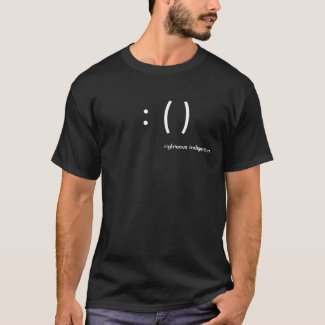
Emoticon:


Welcome another TBOE reader!

I am both prone to taking credit where credit may not be due, and also heavily in favor of people making a buck, which is why I am pleased to announce (and claim I inspired) that "A 33 year-old damsel from Montana" is my latest fan.

The "damsel" is the operator of www. CerealMarshmallows.com -- a website that is devoted to selling just the cereal marshmallows.

Which, you'll recall, I first proposed way back when. So the "damsel" is obviously also a genius, because she recognized a good thing when I proposed it and also because she reads The Best of Everything.

So welcome, Ms. Marshmallow, to the hallowed grounds of TBOE readerdom, and make sure I get a discount, because I'm going to blow my entire allowance on your website this week.

Do you read The Best of Everything and want some recognition? Let me know! Linkers, readers, submitters -- you'll all get featured here. You can even email me at "thetroublewithroy[at]yahoo.com". Put that you're looking for some recognition in the subject line, or that you're submitting something, or that you've linked to me.

Linus was way cool.

Because Mr Bunches broke my reading glasses a while back -- tearing them off my face and breaking them in half -- it's time that I pick up a new pair of spectacles to help stave off impending old age, and I've decided to do it right: no more $5 reading glasses from the corner drugstore.

Instead, I'm going to get a pair of Holiday frames from Zenni Optical. Zenni Optical is that online seller of prescription eyeglass frames for as low as $8 -- stylish, cool, neat frames that they can sell for that low of a price because they make them all themselves, so there's no middleman driving up the prices. And they have a huge selection of frames, too -- just in the holiday section alone the options go on for pages, making it difficult to make up my mind.

But I did. I did make up my mind, and I picked these out:


I know, I know: Harry Potter frames are so five minutes ago. But I like them, and beside, I like to think of them not as "Harry Potter" frames, but as "Linus" frames-- because my own cultural references go way back beyond Harry Potter days and all the way to the time that Linus got his glasses.

So to today's kids, I'll look like Harry Potter, but to myself and those who are truly cool, I'll look like Linus -- and how awesome is that?

Plus, with Zenni Optical, I can get prescription lenses, even bifocals or trifocals or however-many-focals I might need (I think actually the limit is 3). I could even, at these prices, pick out a second pair for Mr Bunches to break, so he'll spare the ones I need.

They've got women's and kids' frames, there, too, so if you need specs, I'd check out Zenni Optical. Just point, click, and see!