Showing posts with label books. Show all posts

Monday, September 09, 2013

This is what you listen to when you write about the most evil being that ever existed. (Playlist)

Looking for a bunch of songs that somehow go together? Try a PLAYLIST! Like this one.

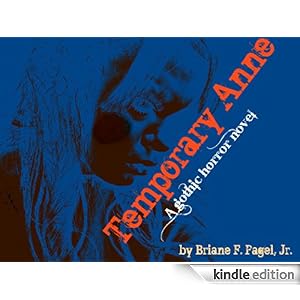
This week Friday, I am releasing a brand new book, 


Temporary Anne.  

And so to help get you in the mood for that, here is an entire playlist of creepy songs, with passages from the actual book mixed in to get you a feel for what you'll be getting.  


My name is Anne. With each day of my life, my actions brought me closer to Hell. Now, with each day of what is left of my existence, I struggle to avoid the fate that was set out for me -- or rather, not just to avoid it, but to master it. 


1. Sad Sad Song, by M. Ward:


Book Passage that Goes With:


What I saw more clearly than the sea was a flowing, pulsing, corpuscle of heat and fire.  Hell is not fire and coals and brimstone.  It is hot, to be sure, or at least my entryway was because I would get no closer than that at that time.  Hot enough that it felt like my eyeballs were blistering.  Hot enough that my skin felt tight and dry and pulled off and shredding already, even though I knew I was still in the ocean because there it was around me.  But this was not flames and hot rocks and burning trees.  It was like flesh made into fire.  If you have ever seen someone cut open in an operation, and seen the quivering, gelatinous, slobbering mass of cells and slime that make up the layers between our skin, you have seen what my Hell was built of: a flowing, slimy, quivering, pulsating mass of burning material. 


Hell is the inside of a blister that stretches across infinity.  


2.  Missed Me, Dresden Dolls:


Book Passage That Goes With:


The arm is reaching towards me, coming over the nurse’s shoulder.
She leans into me.
I see two of the demon's eyes move slightly as it focuses on me. 
It pulses, as though sighing.  
The questing arm sways forward, testing the air between it and me. 
The nurse leans closer.
I see, as she does so, her pale and sweet-smelling skin, and nesting just above her breasts a locket that I knew from experience held a picture of her boy, the boy who wanted to get an A so his Mama would make him another cupcake, would hug him and put his test on her refrigerator, holding it there with a magnet shaped like a puppet. 


3.  Country Death Song, Violent Femmes:


Passage That Goes With:


I slowly put both hands onto the sill and gripped it tightly, the exposed bones in my fingers making dry, rasping sounds on the wood.  The mother stopped making noises.  I knew she had heard or sensed or felt my presence and so I moved.  I pulled myself up quickly and I pressed my dessicated face against the screen and scrambled with my legs and pushed through it, hurtling myself forward onto the counter and watching as the mother, still clutching my great-great-granddaughter, backpedaled away from me and shrieked in terror of a sort I have heard often before.  I was snarling and drooling, and I banged my kneecap on the faucet that stood in my way, I felt a piece of bone drop out and heard it clatter on the metal of the sink as I lunged at the mother, my spindly arms outstretched and my hands splayed, skin flapping and feet scrabbling for purchase.

4. Polka, Yves Klein-Blue


And The Book Passage For That One:


"I've been living in this cabin for 74 years now," he said. He looked around. He motioned to the chair. "I'm going to sit down. You're going to take me to Hell, but you won't do it before I tell you to."
                "How can you be sure of that?" I asked him.
                His hand, that odd right hand, moved again. I thought he was gesturing towards the wall, but he was not; instead, he made a flick of the wrist, as though he was lightly slapping something.
                When he did that, I flew back -- faster and harder than I would have thought possible, as though slapped by a giant hand myself. If I had needed to breathe, the wind would have been knocked from me. As it was, I was smashed into the wall behind me, the thudding sound echoing in my ears as my head cracked onto the wall. I slumped to the ground in a heap, and a few of the drawings scuttered down around me, knocked loose by the impact. One landed in front of me, a picture of a young girl, maybe 17, rendered with almost lifelike realism. She was wearing what was obviously a waitress' uniform. Her head was tilted at an uncomfortable angle and her neck was sliced in half. The blood spurted out, in the picture, onto the tray of food she still held. They're of people I've seen. And what I'd like to do to them, he'd said.

5. 9 Crimes: Damien Rice:

And the excerpt:


      I shriek as my substance burns.  The heat is hot enough to vaporize me, to turn me into motes of dust that would themselves be individually tortured for all eternity, but this dark one was not going to end my own tenure in an instant.  Cell by cell, an iota at a time, Mephistopheles crushes the life out of me and burns me, a miniscule portion at a time, and I howl and moan and yell as the hottest rages of Hell touch me, a heat that I could only have imagined those decades -- centuries?-- before when I had first glimpsed the blistering creation that Mephistopheles had waiting.

A contemporary horror classic, "Temporary Anne" presents the terrifying tale of a woman who avoids eternal damnation by sending others to take her place, scrambling to avoid the minions of Mephistopheles while searching for a way to allow her ravaged body to serve her indomitable will. The frightening images -- demons made of ice, babies' souls consumed -- will stick with you for as long as Temporary Anne exists -- which is FOREVER.


Get it on Amazon for $0.99!  And watch for the blog tour where you can win free copies of this book and all my others.  The tour will be:


Monday, September 02, 2013

INDIESTRUCTIBLE is here!

HEY! Guess what! I am in a book, and so are 28 other people who have

(A) INTERESTING things to say about stuff you want to know interesting things about.
(B) Some experience in writing and publishing, INDIE STYLE, and
(C) SUPERPOWERS.

Probably should've put that last part first, although in the interest of honesty/compliance with THE LAW, I should also note that nobody who contributed to the book I'm talking about has superpowers.*

*So far as YOU know.  Secret identities and all.

The book is INDIESTRUCTIBLE, and for $0.99, you can buy a book that contains all the wit and wisdom and craft-building inspiration of an entire set of indie authors.  Not just me, but greats like Alex Cavanaugh and Jessica Bell and P.T. Dilloway and more!

If you are a writer, if you KNOW a writer, if you READ STUFF, you will want to read this book.  AND, 100% of the profits go to charity.

Here's more, from Jessica Bell, who put this project together:


The day I realized I’d been obsessing over my sales figures way too much was the day I closed my eyes and tried to think about the real reason I am an indie author.

Is my primary goal to make money? No. So why do I keep obsessing over my sales stats? I realized it’s because more sales means more people reading my work. What I really really want is to be read. I want to share the one thing in this world I would cut my fingers off for. I know. If I didn’t have any fingers, I wouldn’t be able to physically write, but you know what I mean.

My passion for writing comes with a perpetual replacement button, attached to my side seam, just in case it becomes unraveled, and falls off, after a day gallivanting through the publishing jungle. It can be tough in there, but in the end, being an indie author is OH SO WORTH IT.

This made me wonder …  what’s everybody else’s story?
Then Indiestructible was born.

Need motivation and inspiration to self-publish, or sign that contract with an interested small press? Have you done all the research you can, but still feel ambivalent about the idea? Indiestructible: Inspiring Stories from the Publishing Jungle brings you the experiences of 29 indie authors—their passions, their insights, their successes—to help you make the leap into indie publishing.

This is not a how-to guide. This is the best of the indie tradition of experienced authors paying forward what they’ve learned, giving you information to help you on your journey. The personal essays in this book will leave you itching to get your work into the hands of readers and experience, first-hand, all the rewards indie publishing has to offer.

Not only is this anthology packed full of interesting, unique, and genuinely helpful information, and totally worth the 99c (only 99c!!!), 100% of proceeds will be donated to BUILDON.org, a movement which breaks the cycle of poverty, illiteracy, and low expectations through service and education.

Pretty amazing, huh?
What are you waiting for?
Buy Indiestructible—support the indie author and an amazing charity—TODAY!

CLICK HERE TO PURCHASE INDIESTRUCTIBLE

eBook: $0.99 USD
Publisher: Vine Leaves Press
ISBN 10: 0987593102
ISBN 13: 9780987593108
Language: English
Edited & Compiled: by Jessica Bell

Contributing authors:
Alex J. Cavanaugh <> Angela Brown <> Anne R. Allen <> Briane Pagel <> C.S. Lakin <> Ciara Knight <> Cindy M. Hogan <> D. Robert Pease <> Dawn Ius <> Emily White <> Greg Metcalf <> Jadie Jones <> Jessica Bell <> Karen Bass <> Karen Walker <> Kristie Cook <> Laura Diamond <> Laura Pauling <> Laurel Garver <> Leigh Talbert Moore <> Lori Robinson <> Melissa Foster <> Michael Offutt <> Michelle Davidson Argyle <> Rick Daley <> Roz Morris <> S.R. Johannes <> Stephen Tremp <> Susan Kaye Quinn

If you're not signed up to participate in the blog tour, but you'd still like to help spread the word, please feel free to copy, paste and post the following on Twitter and Facebook.
FOR TWITTER:
Wanna support the #IndieAuthor? Buy INDIESTRUCTIBLE today! 99c! 100% profits go 2 @buildOnEmpowers #SelfPublishing http://goo.gl/aS0ri
FOR FACEBOOK:
Need motivation and inspiration to self-publish or sign that contract with an interested small press? Have you done all the research you can, but still feel ambivalent about the idea? Indiestructible: Inspiring Stories from the Publishing Jungle brings you the experiences of 29 indie authors—their passions, their insights, their successes—to help you make the leap into indie publishing.

Buy INDIESTRUCTIBLE today! Only 99c! http://goo.gl/aS0ri
100% of proceeds will be donated to BUILDON.org, a movement which breaks the cycle of poverty, illiteracy, and low expectations through service and education.

THANKS SO MUCH FOR YOUR HELP!

~Jessica


So this is an amazing project that I'm glad to have been a part of.  I have read almost all of the essays in there -- I'm working my way through -- and the fact is, it's a great book for anyone who likes writing.  You'll see that you're not alone, you'll get ideas on how and when to write and how and where to sell your writing, and whether you should care about selling your writing at all, as Jessica notes.

Get the book today -- and watch Jessica's blog for details about a giveaway for people who buy the book!


Monday, July 22, 2013

"I'm ready to believe in hell, but without a ceiling." (Quotent Quotables)

So you want to be a monk? ... Well, it's a good opportunity. You'll pray for us sinners; we have sinned too much here.  I've always been thinking who would pray for me, and whether there's anyone in the world to do it.  My dear boy, I'm awfully stupid about that.  You wouldn't believe it. Awfully.  You see, however stupid I am about it, I keep thinking, I keep thinking -- from time to time, of course, not all the while.  It's impossible, I think, for the devils to forget to drag me down to hell with their hooks when I die.  Then I wonder-- hooks?  Where would they get them? What of? Iron hooks? Where do they forge them ? Have they a foundry there of some sort? The monks in the monastery probably believe that there's a ceiling in hell, for instance.  Now, I'm ready to believe in hell, but without a ceiling.  It makes it more refined, more enlightened, more Lutheran that is.  And, after all, what does it matter whether it has a ceiling or hasn't? But, do you know, there's a damnable question involved in it? If there's no ceiling there can be no hooks, and if there are no hooks it all breaks down,which is unlikely again, for then there would be none to drag me down to hell, and if they don't drag me down what justice is there in the world? Il faudrait les inventer, it would be necessary to invent them, those hooks, on purpose for me alone.

-- The Brothers Karamazov

Tuesday, July 09, 2013

"That is, until his father falls out of the sky" (Books!)


Author Andrew Leon has just released the newest installment in his ongoing serialized horror novel "Shadow Spinner":

Tiberius has always thought of himself as a normal 10-year-old boy. Maybe he's a little smarter than everyone else, but that's still normal. He's scared of shadows, but everyone's scared of something, right? His mother's completely paranoid and called the cops the one time, just one time, he went over to a friend's house after school, but, still, he's normal even if his mother is not. At least, that's what he thinks until the day his mother finally decides to tell him about his father, and she tells him things that convince him that one of them is crazy, and he's pretty sure it's not him. That is until the Man with No Eyes shows up and his father falls out of the sky.
I've been reading these as he releases them and I can vouch for this book being phenomenal.  Leon's writing is fantastic: he uses language and plot like an artist uses a paintbrush, in that the further the story goes the more is revealed by the brushstrokes.

Plus, and I probably should have said this first, this book is supercreepy in the horror parts and superfantastic in the rest.  I have no idea where Leon comes up with his ideas, but I wish I could tap into even 1% of the creativity he's got.

Get the latest installment for FREE by clicking here.

Click here to go to part one of the serialization and start at the beginning. (RECOMMENDED ONLY FOR THOSE WHO LOVE GREAT BOOKS AND READING!)

Click here to buy the ENTIRE BOOK all at once in hardcover, or "old-fashioned & outdated" format -- don't wait for the ending like me, just get the whole thing.

And, of course, learn more about Andrew at his blog, "Strange Pegs."  HE POSTS CAT PICTURES. That'll get you clicking over there.

Sunday, July 07, 2013

Here is the Amazon review I just posted about the book "The Gone-Away World" by Nick Harkaway (Books)

One Sunday early this spring, I was watching "Safety Not Guaranteed" on Netflix.  Lying there on my couch, headphones in, the movie playing away on my Kindle, I was nearing the end of the movie and I began thinking about how it might end, where the movie was going, and I thought to myself that there was only one way the movie COULD end if it was to be a good movie.

So as the movie came to what was OBVIOUSLY the conclusion, I was waiting with bated breath, almost literally, to see if it would end that way, if this movie that so far had been so great, so much better than expected, would win or lose -- would provide me with the ending that would make this a great movie, or would wimp out and destroy everything that had come before.

When the ending came, it made me gasp with surprise, start laughing out loud, and get tears in my eyes.  THAT was how great and perfect the ending was: so great and perfect that it actually elicted real-life emotion for me, not about the characters in the movie or about the ending itself or anything so prosaic as that, but rather real-life emotion (surprise, that is) that was sprung forth by the fact that something SO good, so perfect, so wonderful, could exist in pop culture.

We are so used to watered-down, mass-market, half-effort, almost-great things (if not things that are worse) that we have, I think sometimes, lowered the bar for what constitutes greatness.  It used to be that one had to win five Super Bowls to be considered great.  Now, a quarterback can be considered great even if he never makes it to the championship.  It used to be that the entire world watched as man stepped on the moon.  Now, the Kardashians out-rate a man stepping out of a space capsule and falling to earth.  It used to be... well, you get the point, and the point is that so many things are mediocre that the few things that are good are elevated to greatness merely by not being bland. It's as if the entire world was painted beige and so we were forced to give awards to off-white simply because it was slightly less so.

Which makes rare gems so much the more startling, and amazing, to me, rare gems like "Safety Not Guaranteed" and now, this book.

I can count on one hand the number of books I consider truly great.  They are: Catch-22.  American Gods.  Slaughterhouse-Five.  Jonathan Strange and Mr Norrell.  And now this book, which might push one of those off the hand on which I am counting in order to create a second space for Harkaway's book.

I cannot remember, ever, in my life, a book that delighted and surprised me and amazed me so much.  This was a book that began on a hot roll and picked up steam and heat with each word, each sentence, each paragraph, each page.  This book careened and caromed through its story and my head with a vulgar life that shouldered aside every notion of what a book should be, what a story must be, and replaced it with image after image of THIS book.

You can get the plot from the synopsis, or from the 132 other (as I write this) reviews of this book.  I'm not going to recap it because the plot, which is head-and-shoulders above almost every other book you will ever read, is not even the most amazing thing about this book.

The real problem with reviewing this book, in fact, is deciding what IS the most amazing thing about it. Reviewing this book is like trying to describe two circuses performing amidst an amusement park where a series of rock concerts are taking place, and you have cotton candy to eat while this all goes on.  Or a giant pretzeldog.  Whatever. Don't get hung up on the snacks. That's not the important thing. I mean, of course, snacks are important, but I feel we're getting needlessly bogged down here in discussing them.

Also: the circuses are entirely staffed by supermodels.

THAT is this book.  There is so much going on that it's hard to know where to look and all you can really do is stare and take it all in and hope that the details lodge in your mind for later picking at and remembering and recapping and enjoyment, that you can take them with you so that as you sit at your desk listening to someone drone on and on, or as you are stuck in traffic, or as you are drifting off to sleep (at your desk or in traffic) you can turn your mind to the supermodelcircusamusementparkconcert that is this book, and remember it and smile and work on it again, until you can get home and continue reading it.

The language: Harkaway uses words like his characters use the hard and soft styles of fighting, changing up here and there and constantly keeping you looking for the next wave.  He makes up words. He makes references you'll have to google.  His vocabulary is about 37th grade, and yet it works: it's the only way this story COULD have been written, in a way that makes you have to tumble around and grapple with the language itself, but it's enjoyable.  It's like wrestling your six-year-old as you tickle him: you're laughing and sweaty and happy and realize that this, THIS! is how you want to spend your day.

The characters: OH MY GOD there are about 150 zillion characters, and that's not even counting the characters who are other characters, but here's the thing about that: each character is so fully realized, with backstory and quirks and language and companions, that you cannot forget them, or even mix them up.  You'll be able to tell Tobemory Trent from Assumption Soames sixty years from now, and if you and I read this book and then sixty years from now I were to run into you and not even know you and simply say "Pa Lubitsch" you will talk about the bees and that will lead you into remembering Ma Lubitsch's three-point turn and then you will get sad as you remember Marcus Lubitsch but then you'll remember how that turned out so maybe it wasn't sad after all, and you'll have walked twenty paces past me, remembering all these people that are somehow as real as you and I even though they're not...

...and that's kind of the point of the story? Maybe? One of them? One of the nice things about this book is it seems to have points while not needing them, to be able to make a point while not making a point...

...and I'll be looking back at you, too, and we'll both shake our heads and realize that this book has stayed real -- it has been reified, as it were (read the book to get that reference!)-- for us all those years, so real that the mere mention of it will cause us to forget we are living in this world so that we can live in that.

The characters are a sprawling happy mess of people that are instantly memorable and fully recognizable by name, rank, serial number, and catch-phrase.  I can remember every single one of them right now, and I am the kind of person who is pretty sure that Iron Man's secret identity is "Robert Downey, Jr."

The plot! OH YEAH THERE'S THAT TOO.  And it's not the plot you think.  Yes, there's a war and it's sci-fi and there's a fire rescue where they use bombs to put out a fire and there's a fight which involves ducks (but at least the narrator recognizes that's improbable) but none of that is actually the plot, unless it is, and is just one of the many plots.  Reading this book is like reading 75 other books all joined together to band as one, like if Voltron were a book.  (Full disclosure: I'm not sure exactly what Voltron is, but I think I've got the concept right, maybe? Is it like a bunch of little robots banded together to be one big robot? Or cars that form a robot? Or people? I'm not supposed to know that.  I'm 44 and 44 year olds don't need to know what banded together to become Voltron. It's sufficient that I have the concept right.)  If a bunch of books all banded together to make one superbook, they would be this book.  Each character is a book in and of him- or herself, and each of them inexorably moves the main book forward, too, so that you never feel bogged down or think "OH GOD ANOTHER BIO OF ANOTHER CHARACTER," even when that character is a seemingly-innocuous spice merchant in a war zone who also comes to matter, too.

That's probably the most amazing thing about the plot(s), is that they feel slapped together, almost, like they were just written a page at a time without worrying about what came before or what came after, only then as you go on through the story you begin to realize just how this all fits together perfectly -- and it's not like you're waiting and saying "Well, is that part going to come back around?" because it just DOES and then you think "OH MAN IT DID!" and you're great with it.

That's what kept happening in this book.  I would be reading it and then hit a part and think "OH THAT IS PERFECT!" and I would laugh out loud at how great it was that something like this could exist, that a book so perfect and so right and so wonderful to read could have just come into my life.

I didn't want this book to end, because it was too good to ever come to a halt.  I wish I was reading it right now.  I wish everyone was reading it right now, so that we could all look up and meet each other's eyes and say "I know, RIGHT!?!?!" with exactly that many question marks and exclamation points put in there, which is the perfect expression of surprise and delight -- surlight, or deprise, I should say, or maybe combining words isn't enough.  Maybe we need to invent a new emotion for books like this, for moments like this in the culture when someone transcends the mediocre, jumps above the merely "good", looks down as he sails high above the "great" and simply keeps on going to join, up in the heavens, that stratospheric realm where so few creative types ever even get to visit.  Nick Harkaway lives there now, and I hope he sends us a postcard from his new residence because that postcard would, I imagine, be simply awesome.


Tuesday, May 21, 2013

When you have no new messages, perhaps the medium is all you can use to sell your books: On Stephen King's Fake Anti Ebook stance.

"I'm out of ideas."

Hey, remember this post? I do, but maybe you don't.  Just about a year ago I got word that Stephen King was going to only publish his new book in hard copy, not as an ebook. Today -- May 21, 2013 -- Stephen King got yet another bump of publicity out of that stunt, which surely cannot be his plan, right? I mean, why would an author want places like NPR, Huffpo, and the Daily News Books Blog to write about him and his book just before it comes out?

Or, to ask it another way: is it possible that Stephen King's now-much-more-publicized "stance" against ebooks is simply more hype?

SURE, it is possible.  Consider this new quote from Stephen King:

King told the Wall Street Journal that he hopes to inspire fans to buy the print edition in bookstores and said he does not know when he will make the book available digitally. “I have no plans for a digital version,” King said. “Maybe at some point, but in the meantime, let people stir their sticks and go to an actual bookstore rather than a digital one.”

Source.  Hero of print? Hero of talking out of his butt, I think.  Let's focus on that:

I have no  plans for a digital version... maybe at some point.

HERO OF HAVING IT BOTH WAYS AND GETTING FREE PUBLICITY.


What King really wants, as I pointed out in the essay a year ago, and below, is to control your experience of his book, something no author can do.  What he wants, as a corollary, I suspect, is to crack down on e-publishing, which authors think costs them money by keeping book prices down and by letting indie authors in.  They are barring the gate, these legacy authors, and using their market power to try to keep any new writers from getting in, because they like sucking up 90% of the book-buying public's money.  Garrison Keillor once lamented that once everyone can publish a book, all authors will make a couple of bucks.  What he meant was what King means now: once everyone can publish a book, legacy authors will make less money, and they are doing what they can to stop that.

Here is what I wrote about King a year ago:


Today, I sat in my air-conditioned house, with a half-full pint of Ben & Jerry's Red Velvet Cake ice cream and a Diet Coke, reading Great Expectations.

Not the book; I was reading a screen, on my phone, propped up on the table on a molded plastic stand.  I'd eat some ice cream, read a page, swipe a finger and move on.  Ice cream, sip of soda, swipe the finger, move on.

Would Charles Dickens approve of that?

Stephen King would not, I know.  Stephen King thinks I should sit in a sod-roofed hut reading books on paper and if I eat ice cream at all, it should be ice cream I made myself in a still or churn or whatever it was they made ice cream in when ice cream was first invented, and then stored in an ice house under blocks of ice carved out of lakes in the winter and kept under wraps until the summer when the iceman bringeth me some cold.

Stephen King thinks that humanity should never progress and that only certain experiences are authentic enough, is what Stephen King would have you think.

Picking on Stephen King, which will not matter at all to him but matters to me and to people who like to read, expecially people who like to read what they want to read, as opposed to what Stephen King and his publishers want us to read, is difficult for me, as I am a fan of his writing and am in the process of writing an essay lauding one of his works.  But I have to do it, because Stephen King is a big phony who is posturing about how great only his experiences are, and/or Stephen King is also choosing sides in the burgeoning battle between indie authors and Amazon, on this side (a/ka/ people who want to let you read whatever you want to read) and King and Garrison Keillor and old-line publishers on that side -- a/k/a People who cannot figure out how else to save their jobs other than to keep books rare and expensive.

Recently, Stephen King announced that his next book, whatever it will be, is only going to be available in paperback, at least at first.  King announced this and said that he is doing that because he liked reading pulpy thrillers in paperback and wanted his readers to have that authentic experience.

This came as a surprise, kind of, in that King has in the past been at least interested in trying to e-publish his books.  He tried taking one old book he'd never gotten around to finishing and serializing it, charging people about $1.00 per 5,000 words.  The experience, from what I read of it, was less than satisfying, with King being upset that people were illegally downloading his work and limiting the production of new installments, which then caused fewer and fewer people to buy the new installments because they worried that it wouldn't get finished, that he'd quit.

Imagine, a writer quitting writing because not enough people pay him to write!

Perhaps it's that Stephen King isn't really a writer so much as he is a salesman, which is fine -- he sells people a service (storytelling) and I'm okay with that; I sell people a service (suing other people) and make no bones about how expensive that can be.  But I don't pretend I'm doing a public good, or that suing other people is an art that is a higher calling for me*...

*... I don't, also, insist that all lawsuits be carried out with a powdered wig in courtrooms where stenographers take notes with a charcoal pencil, because I'm not as interested in the authenticity of the experience; I just want people not to be harassed by big banks...

...and so when I say something like "If you won't pay me, I won't write that brief," which I don't actually say that much (I'm softhearted) it's at least honest.  When King says If you won't pay me I won't finish this story he's pretending that he's something other than a merchant and that what he's doing is art, and it's too bad he's gotta make a buck at it, but etc. etc. and in the end, he's still a salesman wrapped in wolf's clothing.

Or something; my indexterity with a metaphor is possibly one of the reasons my sales lag behind others.*

*(Another reason? Nobody ever gets my symbolism.  Dear Elizabeth Tecca: I rarely comment on my own writing because it should stand on its own, but I will go so far as to say (a) thank you for the 4-star review of Eclipse and (b) the reason all the nouns are capitalized in those parts has a lot to do with how Claudius thinks.)

King later on tried to e-publish another book, with only about 40,000 copies being sold, a disappointing number for him and his publisher, although only his publisher admitted it.  He's also expressed interest in multimedia-type presentations of writing.

So why the sudden switch away from higher-tech and innovative presentations?  Is it really because King thinks the act of reading a paperback book makes the appreciation of the book so much the better?

And who is he to decide?

Let's assume that King is being honest (he's not, I think, and I'll explain why) and that he honestly believes that his book will be better if you can hold it in your hand, turn a real page with a real finger and smell the ink or the pulp or something, that it will enhance the experience.

In the first place, it is highly unlikely anyone will be reading that book in the same world King read it in, a world where there were only three television channels that didn't even broadcast around the clock, a world without laptops and the Internet and before flying became easy and common, a world that exists now only in reruns of Stand By Me on cable TV.  So King is setting himself -- yourselves -- up for failure:  you cannot be a young Stephen King reading in a hot house at night under the covers while the transistor radio beams staticky news of Tom Gordon into your ears.

In the second place, can the artist dictate to the viewer how his work must be appreciated?  Only, and at best, to a limited extent, and often I find that to be a pretext.  The Beatles, for example, held out and held out making their work available on iTunes, agreeing to do so only at the 11th hour.

Literally: they agreed to license their work exclusively to Apple just before the copyrights were set to expire on their earliest songs.  So was it artistic integrity that caused The Beatles to hold out against digital reproductions of their work?  And if so, why did they change their mind... just before they would be unable to stop anyone from putting Love Me Do online?

One reason I almost never comment on my stories, period -- this post excepted -- is that I think that a work of art must stand on its own.  A painting, a poem, a book, a t-shirt... all of them must be appreciated for what they are, and, as I've posited many times before, the My Aunt's Dog Theorem means that an artist ultimately cannot control what the viewer brings to the work.*

*The My Aunt's Dog Theorem posits that no matter how much time and effort and energy you put into a work, the viewer's own interpretation, based on that viewer's own experiences and mood at the time of consumption, ultimately warps your work into something you may not have intended.  It gets its name from the idea that if you spent a dozen years crafting an abstract painting that attempted to, through the use of pointilism and dadaesque found art make a wry comment on man's inhumanity to man, and finally had it ready to go and unveiled it at the Louvre in front of the entire world, someone would look at your masterpiece and say "Kind of looks like my aunt's dog."

Trying to control the way a viewer sees your art is not only futile but demonstrates a lack of faith in one's ability to actually convey the message through the medium.  One time, when I wanted Oldest Daughter to watch The Amityville Horror, a movie I've always found frightening, I made sure she would have the best chance of being scared, too: we watched it in the dark, with no commercials and no cell phones and no interruptions, my attempt to control all those elements betraying my fears that a 1970s movie might not prove frightening to her when it terrified younger me.

If King was truly comfortable with his writing, he'd trust the reader to get the sense he wants to convey, without having to fret about whether I'm reading it on paper or my phone.  Great Expectations remains thrilling and amusing and interesting even though I read it in spurts between going outside to play water balloons with Mr F.

And trying to control the medium, the message, is bullying -- when Jack White insists you listen to an album on vinyl, he's not just admitting he can't give you gravelly,  bluesy authentic rock and roll any other way, he's insisting that you enjoy things the way he enjoys things, or get the heck out of here and leave him alone.

As I asked on Twitter the other day: Do people who insist books be paper insist also that music be played only on wax cylinders and view only magic lantern shows?

Or does Stephen King go see The Avengers in 3D in an air-conditioned theater even though movies, when he was a kid, had none of those special effects and were shown on small screens in black-and-white?

There's an intellectual dishonesty to the paper-only people; they don't churn their own butter or weave their own clothes but they would deny technological advances to the rest of us, making me read on paper when I'd rather not, because they deem it better.  Paul McCartney wants me to still have a record player.  Stephen King won't let me use my laptop to read his book, and they want me to believe that's because they think it's better that way, but I don't think they believe it, really.

 As I said, if The Beatles really felt making their songs available on iTunes cheapened them, why'd they cave?

I have a trick I use on clients who come see me for foreclosure advice.  I ask them if they want to save their house and they say yes.*

*there is a reason I ask that, but it's lengthy to get into.  Suffice to say it has to do with strategy.

 When I ask why, they say sentimental reasons, often, and I say "What if I were to give you $5,000,000 for it right now. Would you sell?" and they always say yes, which means that it's sentimental value up to a point.  Sentiment's great and all but five million bucks is five million bucks and the kids'll understand if you have to move.

Stephen King thinks his book can only be appreciated in paperback... at first: he's saying later on you might be able to buy it digitally, so apparently after a couple of months pulpy fiction ages just fine onto a Kindle Fire.  How's that for an artistic statement?  Is that one silent movie that won all the Academy Awards now having words and color added?

What's really going on is some combination of contrived scarcity, added value, and a fight against Amazon and other indie booksellers like Smashwords.

Contrived scarcity is what Disney and the makers of Westvleteren 12 beer do (although the latter, being monks, deny that's what they're doing.)  Disney won't let you buy The Lion King whenever you want; you have to wait until it comes out of the vault.  The monks who make "the best beer in the world" carefully limit access to it, although when push comes to shove both open up their doors -- the monks started shipping their beer because they needed money to fix their abbey, which is understandable and they're still doing God's work but they're doing it for a profit.

Making your book available only through a small publisher and only in paperbacks guarantees scarcity, which can drive up demand.  (Westlveteren sells for over $500 a case on eBay).  It guarantees people pre-ordering the book and lines when King goes to the bookstores for signing -- and it guarantees stories about the book for months in advance, free publicity being the best kind, especially if it's authentic free publicity (which is why I'm not naming the book.)

The added value comes from the scarcity of the experience:  when you get that The Lion King DVD, or King's book, or a plain brown bottle of beer, you had to work for it and it's something not everyone has and that makes it more valuable to you.*

*I had an idea for a line of t-shirts once: each one would be simply a plain t-shirt, colored some color, but each would have, up near the collar, a small symbol, say a rocket ship or perhaps a tree or maybe, in some cases, a car.  The symbol didn't matter; what mattered is that there would be a wide array of symbols but only an arbitrary number of them made. I might make, say, 100 rocket-ship-t-shirts, so that if you had one, you were special and people would really want the rocket ships.  I still might do it, once I finish all the other things I'm doing.

The added value also, these days, comes from the feeling that something is authentic: Slow-churned ice cream, organic foods, restaurants that aren't chains, all these things that seem a throwback to something simpler and nostalgic.  There's a diner near us, where Middle Daughter works. It's a mock-1950s diner that people think is a small business and it does a bang-up job of selling that.  It's part of a chain of restaurants in our city owned by a corporation, but very few people know that part or that the owner likely is a Mitt Romney backer.  It feels authentic and that's enough for most people, who never experienced a 1950s diner in the first place.

King's book is supposed to be like 1950s pulpy books and so it'll be more valuable if it feels authentic.  No matter if it is or not, but it can't be, because it was written and produced with modern (i.e., non1950s) processes.

The value is important, as is locking the door to that world of value.  Publishers are running threatened and, don't kid yourself, so are the writers.  One of the people on Twitter who saw my comments said Stephen King has very little to fear from indie authors, and he doesn't but not for the reasons he thinks, and that's why Stephen King and publishers fear indie authors.

King doesn't have to fear indie authors because reading begets more reading.  People who buy books buy lots of books.  Read a good book and you're likely to buy  more books.  E-readers aren't slowing this down: they're increasing the consumption of books -- of all kinds of books. But ebook readers read more: Ebook readers read 24 books on average last year, as opposed to 15 for hard-copy readers.

So if indie writers make more use of electronic formats and people like them, that means that people will buy more books.  What's not to like about that for King, and his publishers?

Aside from the fact that the people on top always fear competition.  King, who likely has enough money to never need to sell another book, still also likely fears someone else outselling him -- whether for monetary or pride reasons.  It can't be fun to be a best-selling author and get beat by Amanda Hocking or that girl who wrote Fifty Shades Of Gray, just as it can't be easy to watch Wool get indie published and then optioned for a movie when nobody's making Stephen King books into movies anymore.

So Stephen King has little to fear from indie writers fiscally,  but much to fear from pride and relevance: Stephen King isn't ready to stop being Stephen King, and rather than take indie writers as a challenge, King has decided it's Katie Bar The Door*

*not sure I'm using that right

time and decided to close the door behind him:  King's publishing method for his next book can be seen not as a way of sharing what it was like to be lil' Stephen reading the pulps but instead a way of proclaiming this to be a "real book" and Kindle Indie Authors to be nothing of the sort.

The real music movement with vinyl adherents has a long tradition*

*long and stupid

And I suspect that King's move is traditional publishing co-opting that to help promote itself and keep writing, and the profits, to themselves.  Real Books By Real Writers is a slogan that has to have been kicked around publishing houses in Manhattan (go ahead and use it, Random House) -- because real books by real writers means the traditional publishing structure with all its inefficiencies and stupidities continues: they get to select who will be published and what, and the rest of us are reduced to bloggers and fanfic writers, assuming the public can be convinced that it makes sense to give up the ease, speed, and inexpensivity*

*probably not a word

of e-readers.  Publishers already hated that Amazon was selling books for $9.99, and that's why Apple and other companies are being sued by the feds, but that's also why you have to pay $15.99 or more for a book that has zero production costs, really.  You know how long it takes to convert a file to a Kindle reader? Five minutes.  Cost of delivery, production, etc.? Whatever five minutes of electricity is plus the cost of storage on Amazon's servers, which is getting cheaper all the time.

So why are we paying $15.99 or more for ebooks?  Because we're paying publishers to produce them in the traditional sense even though no traditional publishing is needed anymore.  Louis CK made a million bucks producing his special himself and Jonathan Coulton doesn't have a record label, and I'm publishing writing every day, on my blogs and in ebooks.*

*Full disclosure: I like to get a hard copy of my books and hold them in my hands, but only because I fear the Internet is just a passing fad.

If King sold his books as ebooks for $9.99, he'd make, under Amazon's pricing model, about $3.50 per book.  If he sold just 40,000 copies, that's $140,000, decent money but not enough to make him a millionaire.  After taxes, that's less than $70,000 take-home (an amount of money that puts him in the upper half of all income earners in the US' most expensive place to live, New York City)

But the publisher wouldn't make hardly anything -- not off Amazon's model, because Amazon takes the rest.  So either King splits with the publisher (in one sense or another) or someone's losing money.

Does King need the publisher? Probably not.  But he wants them -- because, remember, he still wants to be Stephen King and it's harder to be a big name when your name isn't in big letters in all the Barnes & Nobles in America.  Stephen King probably has the muscle to do that on his own -- he could self-publish a book and do a tour and get the posters and the displays and the interviews, but he'd have to arrange it all himself, which means he'd have to spend all that time doing that, or hire someone to do that, and then he'd have to pay that person, which means he's essentially just becoming his own publishing house and why do that when his publishers already have all that stuff just waiting around for him?

So to keep on being Stephen King, King needs publishers -- and publishers desperately need Stephen King to need them because otherwise they don't exist.  If all the authors in all the Starbucks around the world decided that by gum they will go it alone and hire their own publicists and arrange their own tours and design their own covers and etc., Random House goes the way of Lehman Brothers but much more quietly, and all those underpaid editors with BAs in English and hipster glasses grousing about the slush pile suddenly have to be independent contractors hustling for another author and who wants that?

So Stephen King will work to convince people that real means tangible and a whole lot more because Stephen King doesn't want to stop having lines at book signings and because his publisher wants there to be a slush pile, and the alternative is that both me and Stephen King have an equal chance at being the top seller on Amazon come July 1, with the results being dictated by not just writerly skill with a metaphor, but by how hard we work to sell the book and by the fickle demands of the public that right now wants housewife-y BDSM but a year ago wanted dragon tattoos and in July, God only knows.

Stephen King's got an edge in that battle -- neither he nor I nor you know what we'll be reading in July, and our talent is for you to judge, but he's got a whole war machine that's gearing up to puff smoke and steam and charge and make sure you know about his book and see it and hear about it everywhere, real paper and all.  He's inside that machine, and he'll be damned if he's going to let you join him.

Or come outside.

Would King, I wonder, approve of me typing this post on my laptop?  JK Rowling, remember, wrote her books on a legal pad sitting at a coffee shop.  Is writing more authentic when done by hand?  Should I have scratched this on the back of a shovel with charcoal, the way Lincoln wrote his homework, so that you'd know how heartfelt the plea is?

And back to the original question: would Dickens approve of my reading Great Expectations on a telephone, while I ate prepackaged ice cream in a house where the air was being cooled for me?  That's a far cry from the pamphlet-style books Dickens shipped out as serials for people to crowd onto the docks to get.

Dickens serialized his books in part to make more money writing them.  He understood that by selling them as serials he could reach people who might not buy the whole book at once, and that he could thereby broaden his audience and make more money.  Dickens did readings, for profit, too -- charging people a second time to hear his work.

I take that to mean that Dickens was both honest -- he was a salesman, selling stories -- and understood something that King, who apparently fashions himself more a literary artiste than the great Charles Dickens, does not: that the medium is not the message.

Then again, if you've got no messages left in you, then maybe the medium is all you can rely on to keep making a buck.

*****************************************************************

I've always been big on Indie books and publishing, and down on authors who try to crack down on newcomers.  Read here my 2011 best of indie books and predictions for 2012, as well as a discussion of publishing.
Sunday, April 07, 2013

370 words about "Oculus," by author Michael Offutt.

In one word, I'd sum "Oculus," by Michael Offutt, as:

UNFAIR.

But I get 370 words. I'll use them all to explain.

I finished "Oculus" last night. The ending of the book being nothing so much as a headlong rush into a melee of darkness, I was getting more and more into it, feeling the excitement rise and then

BLAMMO,

the book ends, leaving you hanging until the third in the series, apparently being written right now, by which I mean it had better be being written right now, so stop reading this, Offutt. Get back to writing the third book.

"Oculus," continues the trilogy  begun in Slipstream, the plot of the series being "Boy discovers he has the ability to control the flow of time, and also he is the last heir of King Arthur, and there is more than one world, and demons are real, and also he is good at hockey."

(NAILED IT.  I should write book blurbs.)

That doesn't begin to describe how Oculus reads.  From the opening dreamlike gunfight the story unfolds deliberately, piece by intricately plotted piece, layering on myth, science and detail until the entire thing feels real, which is really saying something when one is talking about a book in which a giant stone mouth grinds up bodies to feed to a shadow devil that lives in a black hole.

The many characters have fully-fledged lives which make the people real, too -- and not always in a good way.  Even the main characters have flaws that balance their likeability, making them, too, real-er.  Those details come out in the backstory and mythology, too, legends and hard science mashed into each other: Oculus meshes fantasy elements with scifi so seamlessly it was like reading Foucault's Pendulum co-authored by Larry Niven. Those details, though, don't detract but rather feed the story, which is driven by  adrenaline-producing action setpieces ranging from hockey games to the incredible battle at the end.  Oculus is something you can keep going back to, re-reading and soaking up details, and that's good because until Offutt gets that third book out, I and his other readers are going to have to live with doing just that.

(Done, with four words left over!)

________________________________________________________________________________

In Random Word Reviews, I get a random number of words to review something.  Now aren't you glad you asked? Find more reviews like this here.

Read 10 1/2 questions With Michael Offutt, and my review of his first book, here.

CLICK HERE TO BUY OCULUS BECAUSE YOU LIKE GOOD BOOKS, DON'T YOU? OF COURSE YOU DO, AND THIS IS ONE OF THEM. SO GO BUY IT.

Tuesday, March 27, 2012

71 Words About "The Many Lives Of Yelena Moulin": The Best Short Story That Makes Me Wish I Had Written It.


The Many Lives of Yelena Moulin is one of the best stories I’ve read in years. Set in the future, it focuses on the title character, who stars in a sex show, is killed by a rival, and revived years later as a computer-stored set of memories people call ‘ghosts’, Yelena is the captive of a misogynist rich man with whom she makes a bargain: help him, get freedom. Read it.

Read The Many Lives Of Yelena Moulin on Martian Lit.

Why don't I say more? This is a Random Number Of Words review; read more about those here.

Saturday, March 10, 2012

Don't look now, but I think this guy picked a fight with Dr. Seuss. (Indie Book Review)


A room full of old weapons.

A garage that can't be opened.

Doors that may not be there.

Old men yelling, mysterious chemistry sets, warnings not to talk to some people... and finally, an explosion (almost literally) of magical unreality into their world.

Had the three young stars of Andrew Leon's The House On The Corner known what awaited them when they moved across the country at the start of this book, I doubt they'd have complained half as much.

Tom, Ruth, and Sam, and their parents (who, for a change, in books like this, aren't merely Charlie-Brown-esque ciphers offstage, but are actual characters) move at the start of the summer Return of the Jedi is released -- and what a move it is: across country, an aptly physical metaphor for the shift in reality they're about to experience. Their new house, their soldier dad tells them, was affordable because the previous owners, and their renters, disappeared mysteriously 20 years ago.

Just days into living in their new house -- a house so big and old their possessions don't even begin to fill it, leaving the family rattling around in a space that is too big for them, another physical metaphor apropos of their actual situation -- the kids begin to discover some strange things, including a room on their property filled with ancient weapons, and doors that don't open. But, distracted by the newness of their situation (and the ever-present fun of pizza nights and new friends and Erector sets and Star Wars movies), the kids adapt readily to the strange things -- shrugging some of them off and making use of others.

It's not readily apparent to the kids just how unusual their new house on the corner of the street is... until one day, playing in the empty above-garage apartment, the three of them are transported to a strange new world populated with almost-human kids and a woman with a tail.

From there, the unusual happenings continue on, each more sinister than the last, as unreality begins to blend with their new reality, resulting in sinister teddy bears and fireworks that aren't and the revelation that just as the house isn't perhaps the simple old wooden structure, the family isn't what it seemed to be either.

Andrew Leon has written one heck of a book. He calls it, somewhat misleadingly, a "YA Book," and I suppose he does that because the book is pitched at a roughly tween-to-early-teen level, but like the best writing, this is anything but a "young adult" book, and also anything but typical: It sets up as a standard sort of haunted-house-for-tweens story in the, but that's only because Leon wants to lure you in and create a mood that will be perfect for the many twists and turns he's about to spring on you.

There is a lot to love about The House On The Corner, beginning with the point-of-view style in which it's told: Leon alternates the story among the three children, each telling a chapter. The chapters overlap slightly, so that we get each kid's perspective on what is happening, and the device works far better than I thought it would: Each kid has a unique voice and it's easy to tell who is doing the talking, and the shifts in perspective allow characterization to develop unbeknownst to the others. Tom, for example (the oldest kid) tells his third of the story with a creeping envy and more than a hint of temper as his brother and sister get to experience things he can't, while Ruth, the youngest, tells her side of things simply and without guile -- the way you'd expect a kid to reveal that otherworldly things are happening to her.

It's almost hard to talk about the plot of House without wrecking it for you, beyond what I've done here: What I'll say is this is not a "haunted house" story, it's not a vampire or werewolf or wizard story, it's not dystopian... House falls into its own category, or, if there is a category, I'd peg it with the Pevensies and Narnia: Leon creates a world here, populated by realistic kids, and the story of events that happen in that world doesn't fit neatly into a literary category we have. Perhaps there should be a category for Narnian books -- I suspect Leon will like the characterization -- of families living amidst otherworldly events, and in that category, House (and its expected sequels) can sit easily next to C.S. Lewis' works.)

So I won't talk much more about the plot -- instead, let me bestow another compliment: Spielbergian. Having seen E.T. and Super 8 and The Iron Giant and a host of movies about kids in nostalgic eras having adventures, Spielbergian, like Narnian, is a category, and it's also a tough category to live up to. Leon sets House in the 1980s, and as period trappings mentions music and Dungeons and Dragons and movies, especially movies: Tom and Sam are (as every kid was, then) hooked on Star Wars -- and Return of the Jedi has just come out. Leon mentions Jedi enough -- and more than that, some of his story elements deliberately invoke 80s movies such as Jedi and Empire Strikes Back and, I thought, at one point, Gremlins -- to make it fair to directly compare this work to Lucas' and Spielberg's best: That's what you get when you set your own young kids in the 1980s and throw weird things at them. But Leon is up to the task: he effectively builds a nostalgic world just waiting for something cool to come along that Spielberg (or J.J. Abrams, for that matter) would envy. Those D&D-playing, bike-riding kids from E.T. and the moviemakers of Super 8 wouldn't blink at all if put on the set of House, and I fully expect that someday House On The Corner will be hitting theaters near you.

Of course, it would not be a book review if I didn't prove that I am unbiased by saying something negative about it or the author, so here goes with the bad stuff:

(A) Andrew Leon is dominating my Star Wars Blogathon and it's not fair that he's both a good writer and winning that.

(B) He hasn't finished the sequel yet, so, you know, Andrew, it's one thing to emulate George Lucas and tell great stories; it's another to make people wait 16 years to find out what happens next.

I tore through this book. It is the mark of a good book if I can't wait to read it -- if I'll put aside my Deadspin and my New Yorker and my Tosh.0 and my Big Bang Theory to read the book, and with House, I did more than that: I devoted almost an entire Sunday to reading the last 1/5 of it because I couldn't wait to find out what happened.

The House On The C
orner is available on CreateSpace, and your Kindle, and your Nook, beginning at $2.99. You can find links to all of those (and get a signed copy) through Andrew's site, which is where those links send you. If I were you, I would get the hard copy, signed. It's going to be worth money some day, and this is the kind of book you'll want to have sitting on the shelf to read to your kids on summer nights.

As is usual with these things, I sent Andrew 10 1/2 questions -- 3 questions about his book, 3 about him, 3 I felt like asking, and then the impossible question and the 1/2 question. Let's see how he did:


About The Book:

1. The period details ring very true to me -- the book takes place the year Return of the Jedi is released, and there are enough subtle references to that era (D&D, U2's new album) to make the time seem important to the story. Was there a reason you set the story when you did?
The idea for that came out of watching a group of kids playing at recess at my kids' school. They were playing Star Wars. It was a group of 4 or 5 boys, and they were all Jedi knights. The parallel of that to my own childhood really struck me, how that has been reincorporated into this new generation. My kids know that Star Wars was important to me as a kid, but it's a very vague knowledge. Like knowing that there are time zones but still behaving as if everyone on the planet is awake at the same time. I really wanted to give my kids, because House was written primarily for them, a taste of what it was like to grow up in the 80s.


2. You've mentioned on your blog that one thing that helped you write this story was having it told from your kids' perspective. The portrayals of all three children -- and their unique voices as they alternate telling the story -- are very lifelike and well-rounded. But there are some negative aspects to each kid. For example, Tom appears to have a jealous streak. Did your children object to "their" characters being given negative, as well as positive, aspects?
Actually, no, they didn't get upset about any of that. I think they know themselves well enough that it just made them seem more real. However, because there were so many similarities, they would actually get mad at each other over things that I would have them do in the book. Not because they'd actually happened, but, because they knew if they were actually in that situation, that's what that person would have done. I had to have several "talks" with them about how the characters weren't really them and that they weren't allowed to get mad over things that happened in the book.


3. I don't want to spoil the surprises of the book too much, so I'll be kind of general: how much did you work out the rules for, and the structure of, the universe in which House is set before writing the story? Was it ad hoc or did you conceive of the universe and then write a story around it?
It's kind of both. Because imagination is such a huge part of the story, and it's such a huge part of the story because imagination is fundamental in the life of children, that part gets to be a bit ad hoc. I can do what I want with it when I want to do it, because it's dependent on the child and the specific child's way of viewing things. However, imagination is a huge part of the book, and to reflect that and reflect cultural imagination, some of it's real. Basically, it's been imagined by so many people for so many centuries that those things are as real as reality. So monsters are real. At least, older, traditional monsters are real. Like the trolls. And the World Tree is an important concept. In many ways, everything is built off of that idea.


About the Author:

4. House, as well as your participation in the Star Wars Blogathon, show that you have a pretty strong affection for (and knowledge of) the Star Wars movies. Do you feel those movies have a particular hold on you, and if so, what is the attraction?
Yes, those movies have a particular hold on me. The first time I saw Star Wars in the theater, I had to go to the bathroom so bad, but I wouldn't leave the theater. I couldn't miss any of the movie. Couldn't. I had to go behind a dumpster in the parking lot on the way to the car, because I couldn't make it home, and the line inside had been too long, also. That movie changed my life. Well, as much as anything can change the life of a 7-year-old. It opened up the universe for me. I don't know if there can be a stronger attraction for a kid.


5. Maurice Sendak said he doesn't write children's books -- he writes books that other people decide kids should read. On your blog recently, you mentioned The Pigman as a book that may have given you inspiration for House. What books did you read as a child that you carried with you into adulthood, and what about them stuck with you?
Before I answer your question, I want to say that I like that about Sendak. That's how I feel. Even though I wrote House for my kids, I didn't write it to be a kid book. It's just a book that people think should be for kids because it's about kids, but I think it's for adults, too. Like Looney Tunes or Animaniacs. There's the level where it's for kids, and there's the other level where it's for adults.
Hmm... books I read as a child.... well, first, there was The Hardy Boys. That was the first fiction I really got into, and I read as many of those as I could get my hands on. They got an honorary mention in House for that. Beyond those... well, here's a list:

The Prydain Chronicles (Lloyd Alexander): Probably Gurgi. I loved that character. Although, my favorite of the books is Taran Wanderer, and that one may not have Gurgi at all. But Taran's journey, especially learning how to forge his own sword and the lesson that making a good, strong sword was more important that making a pretty, shiny sword, has always seemed significant to me.

A Wrinkle in Time (Madeleine L'Engle): I really need to read these again. I've been wanting to for a while. Just the whole thing about folding space fascinated me as a kid. And when they went to the two-dimensional world. That was pretty awesome.

Bridge to Terabithia (Katherine Paterson): It was the first book to make me cry. A couple of my friends read it, too, and we got together and made our teacher read it. She got mad at us, because we didn't tell her it would make her cry.

The Gammage Cup (Carol Kendall): I read this well before I read The Hobbit, so I didn't realize how heavily influenced by The Hobbit it had been until years later. At the time, though, it was one of those stories kind of like House, that anyone could find something magical at any moment and do great things.
Those are the big ones that happened prior to middle school, at least the ones I can think of at this moment, so I'll leave it at that. There were probably others that I'm not thinking of, and there are certainly many, many more that happen later, but I think I'll draw the childhood line at middle school. I also have a lot of my early influences listed and explained on my "Of Significance..." page on my blog.

6. I haven't read your blog long enough to know the answer to this question: Do you have a 'day job?' Or do you write full-time?
My "day job" is being the house dad. It doesn't really leave me time to write full time, especially with all the dog duties, but I usually manage to pull out a couple of hours a day.


Things I Feel Like Asking:

7. There's always a food-related question on these things, so I'll lead with that: What's the most unusual topping you've ever had on a sandwich, burger, or pizza? And did you like it?
How about a taco? I still feel like fish tacos are weird. I mean, at some level, they just aren't right. But I like them.

8. True or False, and then Explain Your Answer: Poets should be allowed to make up words as they see fit, but not novelists.
False. Actually, I'd prefer it if no one just made up words, but I don't think that poets have any more license to do it than a prose writer. Besides, if you can't make your rhyme without making up a word to do it, you should probably not be writing poetry.


9. Christmas seems like it's pretty much the biggest holiday going, and is unstoppable, although Halloween is fighting back. If you had to pick one currently-existing holiday to replace one or both of those, which would you pick, and how would we celebrate it to make sure it's a big deal?
Oh, I don't have a good answer for this one. I don't particularly care for Halloween and actually do wish that Thanksgiving was the still the big #2 of holidays. It seems the only way to make a holiday a big deal is to make it something that requires the expenditure of huge amounts of money, and I'm really not for that either.

The Impossible Question:

10. Many people describe an impossible task as being like trying to describe colors to a person blind since birth. But here's something equally hard: How can you describe a smell to someone without comparing it to any other smells?
I don't think you can. And I think you were inspired to this question by that happening in House where Tom is talking about the smell of old books and having nothing to compare it to. Like new car. However, smells are strongly linked to memory, so, I suppose, if you really wanted to communicate a smell, the best way to do it would be to evoke some kind of powerful memory and say that the object in question smelled like that memory.

[NOTE: That was EXACTLY the inspiration for the question. Andrew Leon, quit using your Jedi mind tricks on me. These are the droids I'm looking for, dammit!]

And the 1/2 Question: Finish, and then answer, this question:

1/2: Who did Elvis... get the idea for his jumpsuit from?

Elvis was once visited by time travelers from the future. Of course, they were all wearing white jumpsuits, because everyone in the future wears white and wears jumpsuits. Elvis thought they were groovy, so he co-opted the idea. Of course, he had to decorate his. The interesting part of this is that Elvis is a central figure in the future, almost worshipped, and people wear white jumpsuits out of reverence for him

[Note, 2: I suspect that is where Elvis learned to time-travel.]

SO, lessons we've learned:

(1) Fish tacos are weird.
(2) Dr Seuss, you were doing it all wrong.
(3) Why haven't you gone to buy and read The House On The Corner? Was I not clear enough in my recommendation? GO BUY IT. This is the book you're looking for. *waves hand.*

Get The House On The Corner:

From Andrew's Blog

Or Createspace

Or your Kindle

Or your Nook
.